Embedded Computing
  • About
  • Blog
  • Hardware
    • Which Platform?
    • Controller Platforms >
      • Adafruit Platform
      • Arduino Plaform
      • BBC micro:bit
      • Espressif Platform
      • iLabs Platform
      • Raspberry Pi Platform (MCU)
      • Seeed Platform
      • Silicon Labs Platform
      • Teensy Plaform
    • Computer Platforms >
      • BeagleBone Platform
      • Raspberry Pi Platform (SBC)
      • UDOO Platform
    • Peripherals >
      • Shields
      • Grove System
      • Sensors
      • Actuators
    • Displays >
      • E-Paper Displays
      • Reflective Displays
      • TFT Displays
      • LCD Displays
    • Legacy Platforms >
      • chipKIT Plaform
      • 4D Systems Platform
      • Intel Platform
      • LaunchPad Plaform
      • BoosterPacks for LaunchPads
      • LightBlue Bean
      • Maple Plaform
      • Mediatek Platform
      • Microsoft Azure IoT DevKit
      • Particle Platform
  • Software
    • Exploring RTOS with Galaxia >
      • Event Library
      • Semaphore Library
      • Mailbox Library
      • Timer Library
      • Clock Library
      • SWI Library
      • Task Library
    • Ultra-Low Power with EnergyTrace >
      • Ultra-Low Power with MSP430
      • Ultra-Low Power with Energia MT and Galaxia
    • Using Integers Instead of Reals
    • Going Python?
  • IoT
    • IoT Platforms: Which Hardware? >
      • Matter with Silicon Labs MG24
    • IoT Services: Which Solution? >
      • Recommended IoT Solutions
      • Platform-Specific IoT Solutions
      • Other IoT Solutions
      • Not tested IoT Solutions
      • Notification Solutions
    • Get Date and Time from Internet with NTP
    • Fast and Easy WiFi Connection with QR-Code
  • Tools
    • How to Start?
    • Reference >
      • Asking for Help
      • Boards Pins Maps
      • Ruler
      • Boards and Plugs
      • I²C Logic Level Converter
      • Standards for Connectors
    • Training >
      • Texas Instruments Workshops
      • Embedded Systems: Shape The World — MOOC edX UTAustinX UT.6.02x
      • Embedded Systems - Shape The World: Microcontroller Input/Output — MOOC edX UTAustinX UT.6.10x
      • Embedded Systems - Shape The World: Multi-Threaded Interfacing — MOOC edX UTAustinX UT.6.20x
      • Real-Time Bluetooth Networks: Shape the World — MOOC edX UTAustinX UT.RTBN.12.01x
      • Systems Thinking with Texas Instruments Robotics System Learning Kit
    • Books >
      • Getting Started with the MSP430 LaunchPad
      • Getting Started with Arduino
      • Arduino Cookbook
    • IDE >
      • The Battle of IDEs
      • More Options
      • Assessing the Next Generation of IDEs
      • Tools for Documentation
    • Equipment >
      • Saleae Logic Analyser
      • Rigol DS1102E Oscilloscope
      • XDS110 Debug Probe with EnergyTrace​
      • Segger J-Link Programmer-Debugger
      • Nordic Power Profiler Kit II
  • Projects
    • Libraries >
      • Master I²C Software Library
      • Date and Time Library
      • highView Library Suite
      • Others Libraries
    • smartDevices >
      • I²C smartColours Smart Sensor
      • I²C smartRFID Smart Sensor
      • I²C smartLED Display
      • I²C smartControls Smart Device
      • I²C smartWiFi Smart Device
      • I²C smartBLE Smart Device
      • I²C smartNode Smart Device
    • IoT Projects >
      • Remote E-Paper Weather and Message Board
      • Typie-Walkie with LoRa and E-Paper Screen
      • Typie-Walkie with E-Paper Screen
      • Remote e-Paper Pictures Panel
      • Remote e-Paper Messages Panel
      • Industrial IoT Project
      • Remote Contactless Temperature Monitor
      • Using Node-RED for IIoT
      • Low Power Home Network Weather Monitoring
      • Updated Low Power Home Network Weather Monitoring
      • Weather and Security Station with Blynk
      • SensorTag to Blynk Using Node-RED
      • Pervasive Reporting
    • AI Projects >
      • Colour Recognition with Neural Network
    • Other Projects >
      • Air Quality Monitoring
      • Driving a Large E-Paper Display with a Compact Xiao RP2040
      • Low-Power E-Paper Weather Station
      • Portable Particulate​ Matter Monitor
      • FRAM-based E-Paper Screen Controller
      • General Purpose 3.5" Screen
      • Colour Recognition with Neural Network
      • A Low Power Weather Station
      • Digital Volt-Amp-Watt Meter
      • Mobile Measurement with LCD Display
      • Screen with SRAM for GUI
      • Volt-Amp-Watt-Meter for Grove
      • Multi-Touch Project with CapTIvate

PlatformIO Extension for Atom and Visual Studio Code

PlatformIO is an extension for Atom, the modular editor from Github, and for Visual Studio Code, the modular IDE from Microsoft.

To install PlatformIO,
  • Download and install Atom or Visual Studio Code first,
  • launch Atom,
  • Call the menu Atom > Preferences > Packages,
  • Search for the platformio-ide extension and click Install.

The PlatformIO website provides all the required documentation for configuring PlatformIO.
Picture
Picture
Picture
Atom, Visual Studio Code and PlatformIO

Using make and the makefiles

I haven't tried the makefiles I've been developing for embedXcode since 2010 with Atom. I went directly to the PlatformIO solution.
​

Using PlatformIO

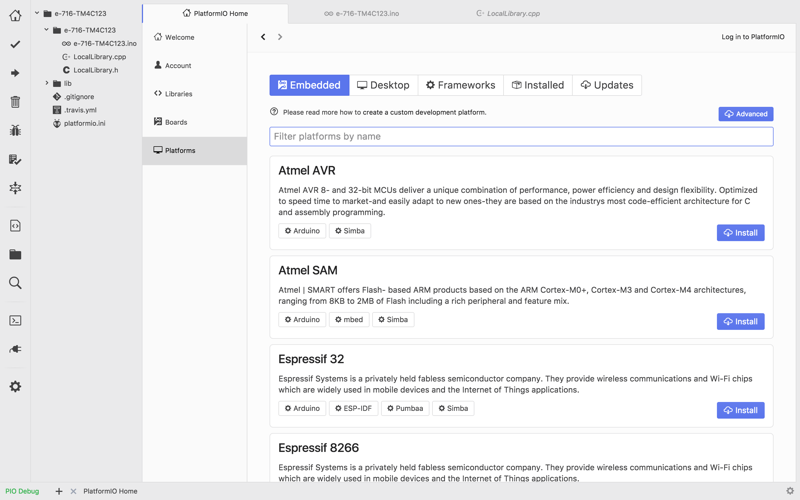
Once PlatformIO is installed, the next step is to select the boards and libraries. PlatformIO downloads the corresponding packages.

Some platforms are not yet supported, like the popular LaunchPad CC3200 or the RTOS-enabled LaunchPad MSP432.
Picture
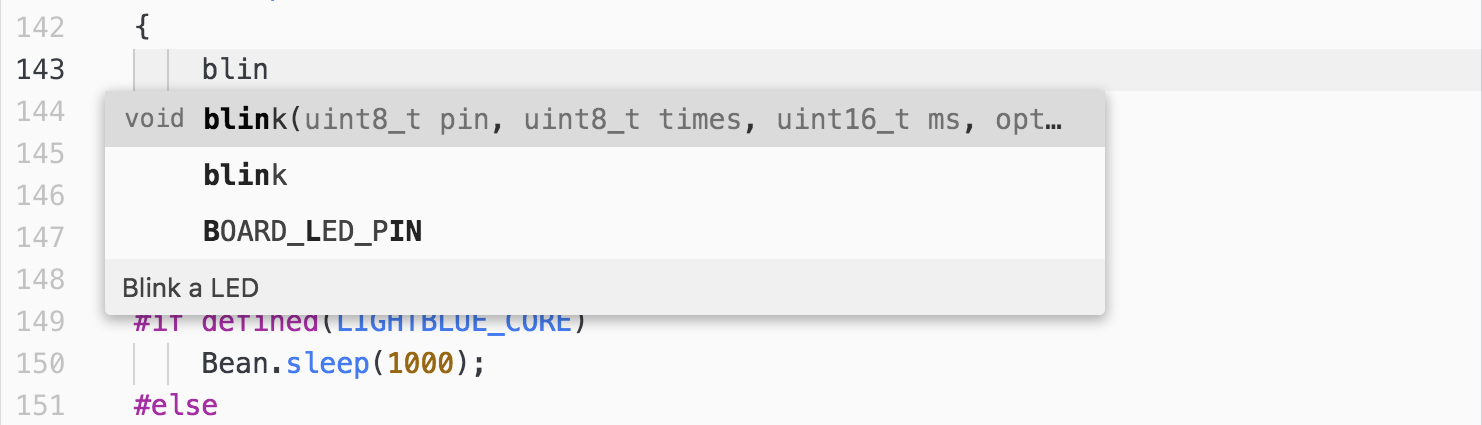
The editor features all the modern niceties, including auto-completion and contextual documentation.

Picture
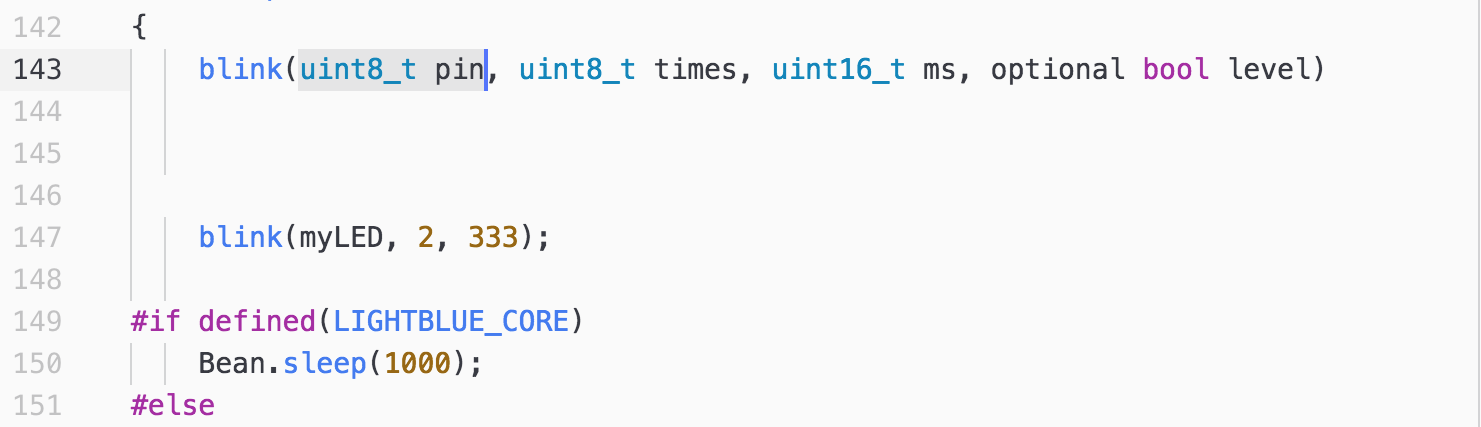
​Here, the parameters for the blink() function are listed.
​

Picture
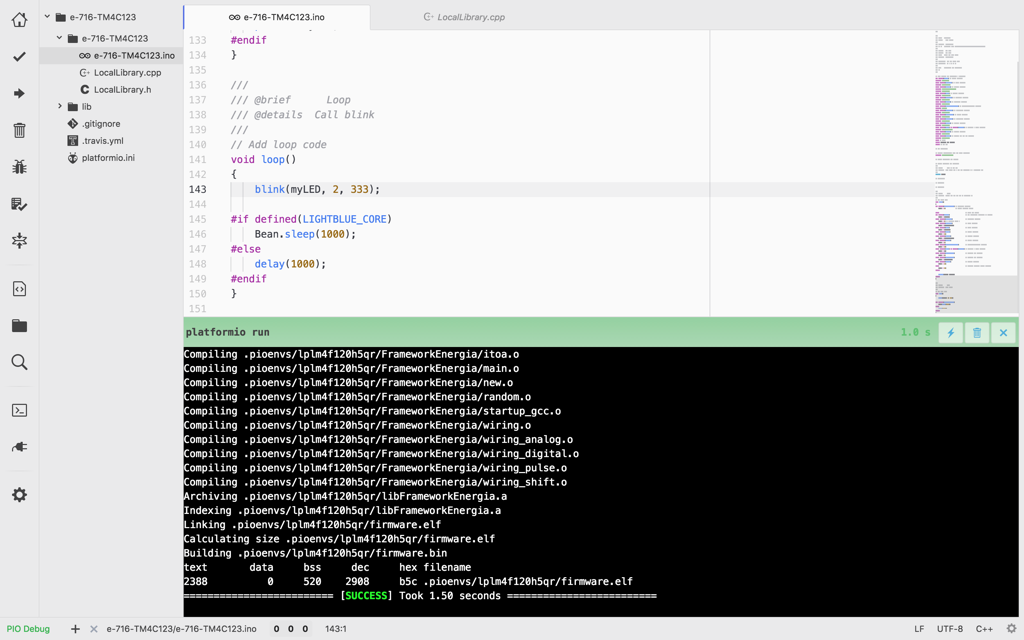
The main targets are available on the tool bar on the left of the screen and include Build, Upload, Clean, Debug.

​Build goes fast.

​Actually, the PlatformIO IDE is a font-end for the PlatformIO Core, a proprietary build system.
Picture
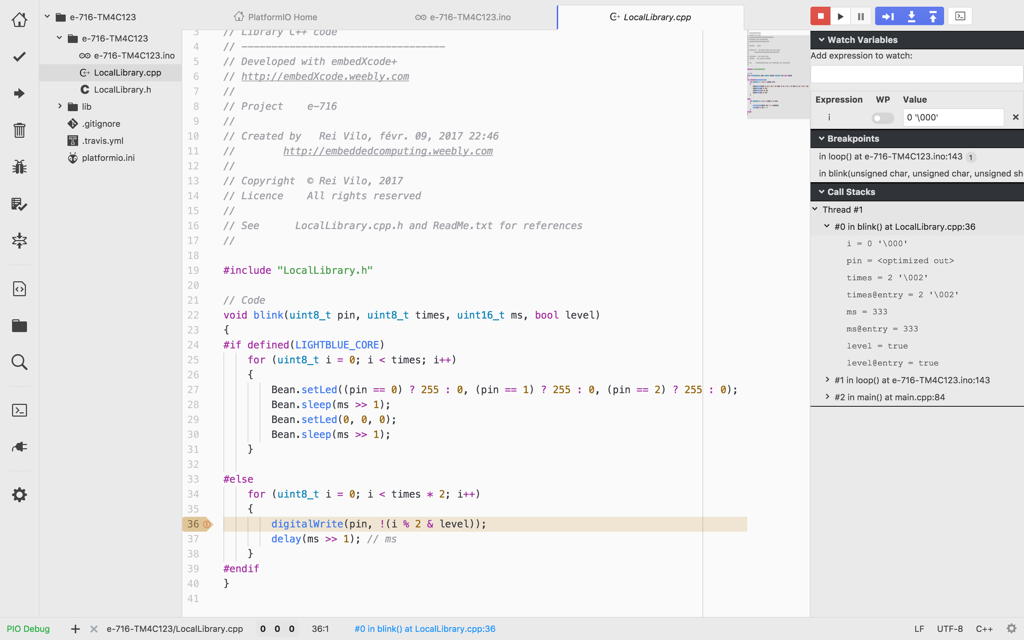
Debugging works fine. 

Defining a breakpoint is done through a contextual menu or by pressing F9. There is no shortcut like clicking on the line number. I don't know whether this restriction comes from Atom or from PlatformIO.

​Similarly, I haven't found how to define a conditional breakpoint.

The debugging pane shows the local variables, the breakpoints and the call stack.
Picture
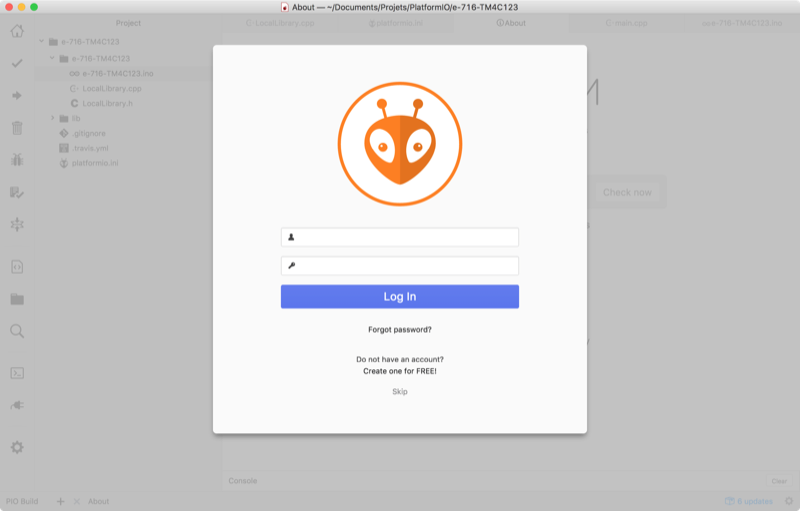
However, access to debugging requires to create an account and to log in. The reason for that is some features are commercial.

​Debugging is in trial mode for 30 days on the Community or free version. 
Picture

Conclusion

I really liked the ease of installation with the built-in boards and libraries managers, although some popular boards aren't supported yet.

The tool bar on the left provides instant access to the most common targets, including debugging.
Picture
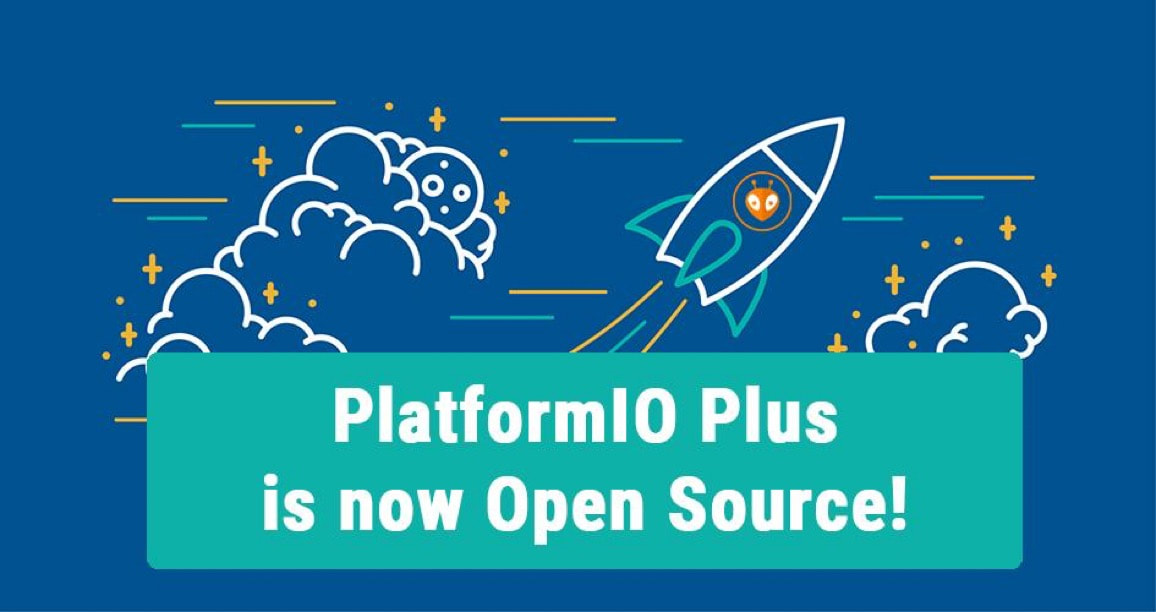
​In a statement released 18 June 2019, PlatformIO announced PIO Plus in now open-source.
​
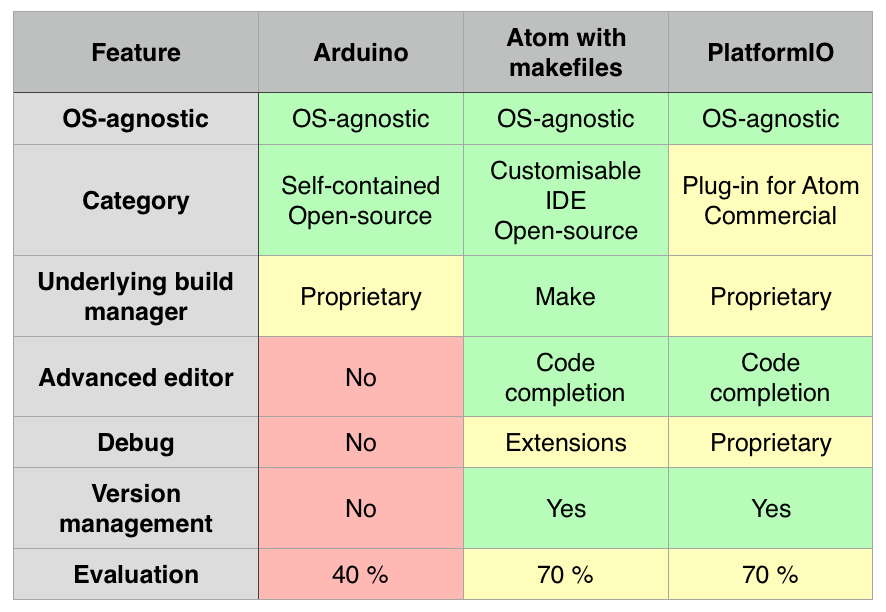
Contrary to the other solutions reviewed, PlatformIO is commercial, with a very clear list provided at the Plans and Features page. For example, debugging is in trial mode for 30 days on the Community or free version. 

Paid subscriptions start at $120 / year ($10 / month billed annually), but getting support requires an even more expensive plan at $1200 / year ($100 / month billed annually). 

Both appear as too expensive for makers and hobbyists.

​Similarly, I'm not a big fan of the subscription model for 
software. 
Picture

Update January 2019

PlatformIO comes in two flavours, Open Source and PIO Plus. It relies on the SCons construction tool, with underlying Python.

PlatformIO promotes itself as IDE-independent, and is now available for a large set of desktop and cloud IDEs. It comes as an Atom package or a Visual Studio Code extension and integrates with Cloud and Desktop IDEs including Cloud9, Codeanywhere, Eclipse Che, CLion, CodeBlocks, Eclipse, Emacs, NetBeans, Qt Creator, Sublime Text, VIM, and Visual Studio.

I tested PaltformIO with both Atom and Visual Studio Code. Visual Studio Code is a clear winner for the integration, speed and features. 

Update June 2019

In a statement released 18 June 2019, PlatformIO announced PIO Plus in now open-source.

As a consequence, the debugging, unit testing and remote agent features are now free
.

This is a welcome option to consider when looking for a more capable IDE.

PlatformIO now accepts donations.
Picture

Pros

  • Easy installation
  • Good editor
  • Board and library manager
  • Support for Linux, macOS and Windows​

Cons

  • ​Some platforms not yet supported
  • Proprietary solution

Wrap-Up

  • Easy installation
  • Fully open source
  • Better results with Visual Studio Code

Links

  • Atom by Github
  • Visual Studio Code by Microsoft
  • PlatformIO
  • PlatformIO Plus
  • PlatformIO forum
Picture
Picture
Picture

Posted 11 May 2017
Updated 16 June 2017, 21 January 2019, 19 June 2019

Powered by Create your own unique website with customizable templates.