Embedded Computing
  • About
  • Blog
  • Hardware
    • Which Platform?
    • Controller Platforms >
      • Adafruit Platform
      • Arduino Plaform
      • BBC micro:bit
      • Espressif Platform
      • iLabs Platform
      • Raspberry Pi Platform (MCU)
      • Seeed Platform
      • Silicon Labs Platform
      • Teensy Plaform
    • Computer Platforms >
      • BeagleBone Platform
      • Raspberry Pi Platform (SBC)
      • UDOO Platform
    • Peripherals >
      • Shields
      • Grove System
      • Sensors
      • Actuators
    • Displays >
      • E-Paper Displays
      • Reflective Displays
      • TFT Displays
      • LCD Displays
    • Legacy Platforms >
      • chipKIT Plaform
      • 4D Systems Platform
      • Intel Platform
      • LaunchPad Plaform
      • BoosterPacks for LaunchPads
      • LightBlue Bean
      • Maple Plaform
      • Mediatek Platform
      • Microsoft Azure IoT DevKit
      • Particle Platform
  • Software
    • Exploring RTOS with Galaxia >
      • Event Library
      • Semaphore Library
      • Mailbox Library
      • Timer Library
      • Clock Library
      • SWI Library
      • Task Library
    • Ultra-Low Power with EnergyTrace >
      • Ultra-Low Power with MSP430
      • Ultra-Low Power with Energia MT and Galaxia
    • Using Integers Instead of Reals
    • Going Python?
  • IoT
    • IoT Platforms: Which Hardware? >
      • Matter with Silicon Labs MG24
    • IoT Services: Which Solution? >
      • Recommended IoT Solutions
      • Platform-Specific IoT Solutions
      • Other IoT Solutions
      • Not tested IoT Solutions
      • Notification Solutions
    • Get Date and Time from Internet with NTP
    • Fast and Easy WiFi Connection with QR-Code
  • Tools
    • How to Start?
    • Reference >
      • Asking for Help
      • Boards Pins Maps
      • Ruler
      • Boards and Plugs
      • I²C Logic Level Converter
      • Standards for Connectors
    • Training >
      • Texas Instruments Workshops
      • Embedded Systems: Shape The World — MOOC edX UTAustinX UT.6.02x
      • Embedded Systems - Shape The World: Microcontroller Input/Output — MOOC edX UTAustinX UT.6.10x
      • Embedded Systems - Shape The World: Multi-Threaded Interfacing — MOOC edX UTAustinX UT.6.20x
      • Real-Time Bluetooth Networks: Shape the World — MOOC edX UTAustinX UT.RTBN.12.01x
      • Systems Thinking with Texas Instruments Robotics System Learning Kit
    • Books >
      • Getting Started with the MSP430 LaunchPad
      • Getting Started with Arduino
      • Arduino Cookbook
    • IDE >
      • The Battle of IDEs
      • More Options
      • Assessing the Next Generation of IDEs
      • Tools for Documentation
    • Equipment >
      • Saleae Logic Analyser
      • Rigol DS1102E Oscilloscope
      • XDS110 Debug Probe with EnergyTrace​
      • Segger J-Link Programmer-Debugger
      • Nordic Power Profiler Kit II
  • Projects
    • Libraries >
      • Master I²C Software Library
      • Date and Time Library
      • highView Library Suite
      • Others Libraries
    • smartDevices >
      • I²C smartColours Smart Sensor
      • I²C smartRFID Smart Sensor
      • I²C smartLED Display
      • I²C smartControls Smart Device
      • I²C smartWiFi Smart Device
      • I²C smartBLE Smart Device
      • I²C smartNode Smart Device
    • IoT Projects >
      • Remote E-Paper Weather and Message Board
      • Typie-Walkie with LoRa and E-Paper Screen
      • Typie-Walkie with E-Paper Screen
      • Remote e-Paper Pictures Panel
      • Remote e-Paper Messages Panel
      • Industrial IoT Project
      • Remote Contactless Temperature Monitor
      • Using Node-RED for IIoT
      • Low Power Home Network Weather Monitoring
      • Updated Low Power Home Network Weather Monitoring
      • Weather and Security Station with Blynk
      • SensorTag to Blynk Using Node-RED
      • Pervasive Reporting
    • AI Projects >
      • Colour Recognition with Neural Network
    • Other Projects >
      • Air Quality Monitoring
      • Driving a Large E-Paper Display with a Compact Xiao RP2040
      • Low-Power E-Paper Weather Station
      • Portable Particulate​ Matter Monitor
      • FRAM-based E-Paper Screen Controller
      • General Purpose 3.5" Screen
      • Colour Recognition with Neural Network
      • A Low Power Weather Station
      • Digital Volt-Amp-Watt Meter
      • Mobile Measurement with LCD Display
      • Screen with SRAM for GUI
      • Volt-Amp-Watt-Meter for Grove
      • Multi-Touch Project with CapTIvate

IoT with Cayenne MQTT

Cayenne is entirely built around a dashboard, available through a browser or with an iOS or Android app. The dashboard includes widgets, and each widget is connected to sensors or actuators. On top of that, ​Cayenne adds two unique features: a scheduler and triggers.

After the previous hectic test with Cayenne for Arduino, I was luckier with the new release of Cayenne MQTT. Cayenne MQTT relies on the standard MQTT protocol for short messages.

I ported the Cayenne MQTT libraries to Energia and used them with two configurations:
  • a CC3200 LaunchPad, and
  • a TM4C123 LaunchPad with the CC3100 BoosterPack.  

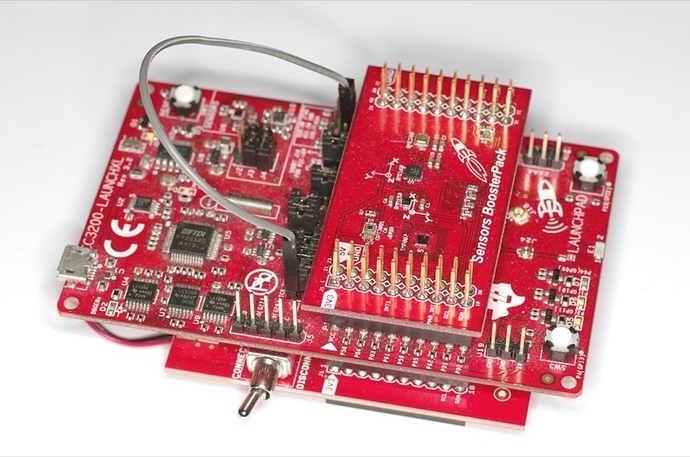
​On the right, the project includes a CC3200 LaunchPad and two BoosterPacks, the Sensors BoosterPack and the Fuel Tank MK-II BoosterPack.
Picture

Cayenne MQTT with Energia

I reused the Weather and Security Station with Blynk project and tried to replicate with Cayenne MQTT.

Porting the Cayenne MQTT library to the CC3200 and CC3100 was fast, thanks to the clean implementation of the Cayenne libraries and the high level of compatibility of the Energia libraries.


The modified library is available at Cayenne MQTT Arduino Library for Energia. The library for the weather sensors is available at Sensors BoosterPack library. The example discussed here is available at CC3200_Sensors_Cayenne.

To install the libraries on Energia, please follow this step-by-step Managing Energia Libraries procedure.

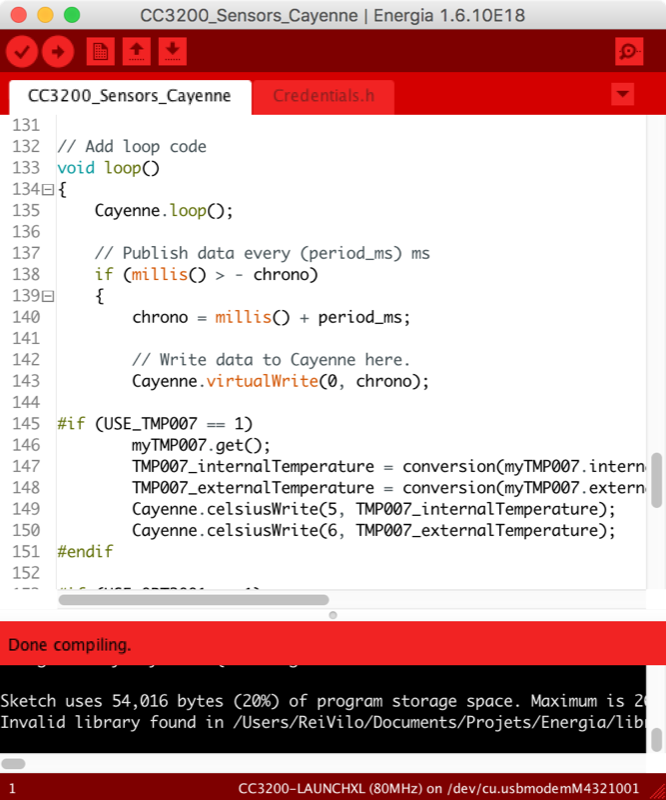
Just edit Credentials.h header file and specify:
  • ​For the WiFi network: SSID and password
  • For Cayenne MQTT: username, password and client ID on the Credentials.h header file. 

​
Picture
Then launch the standard build and link, upload and run process.

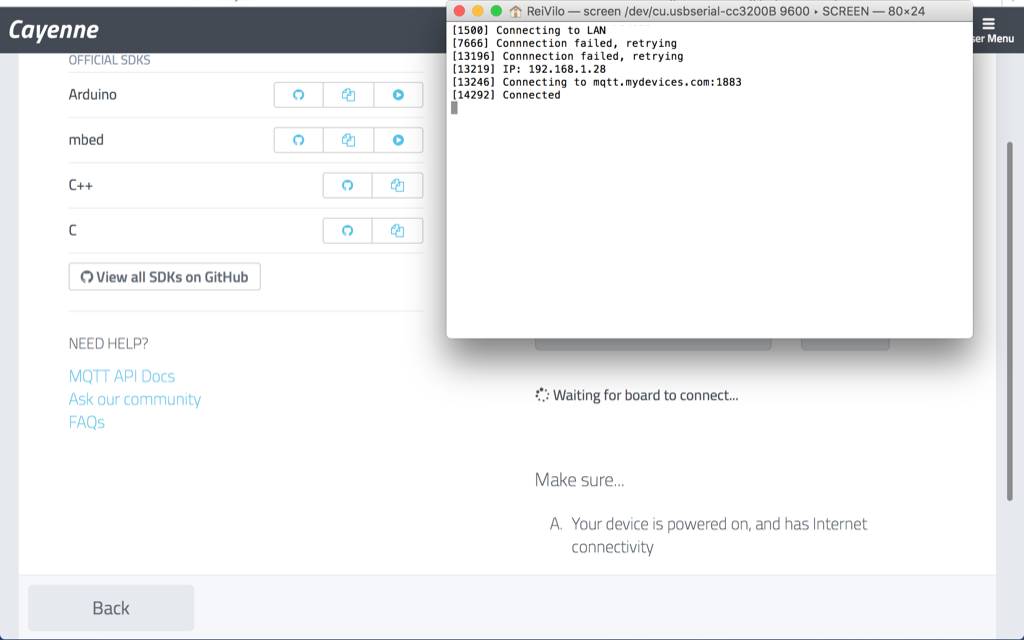
​Cayenne waits for the board, connects directly and updates to the dashboard page. 
Picture
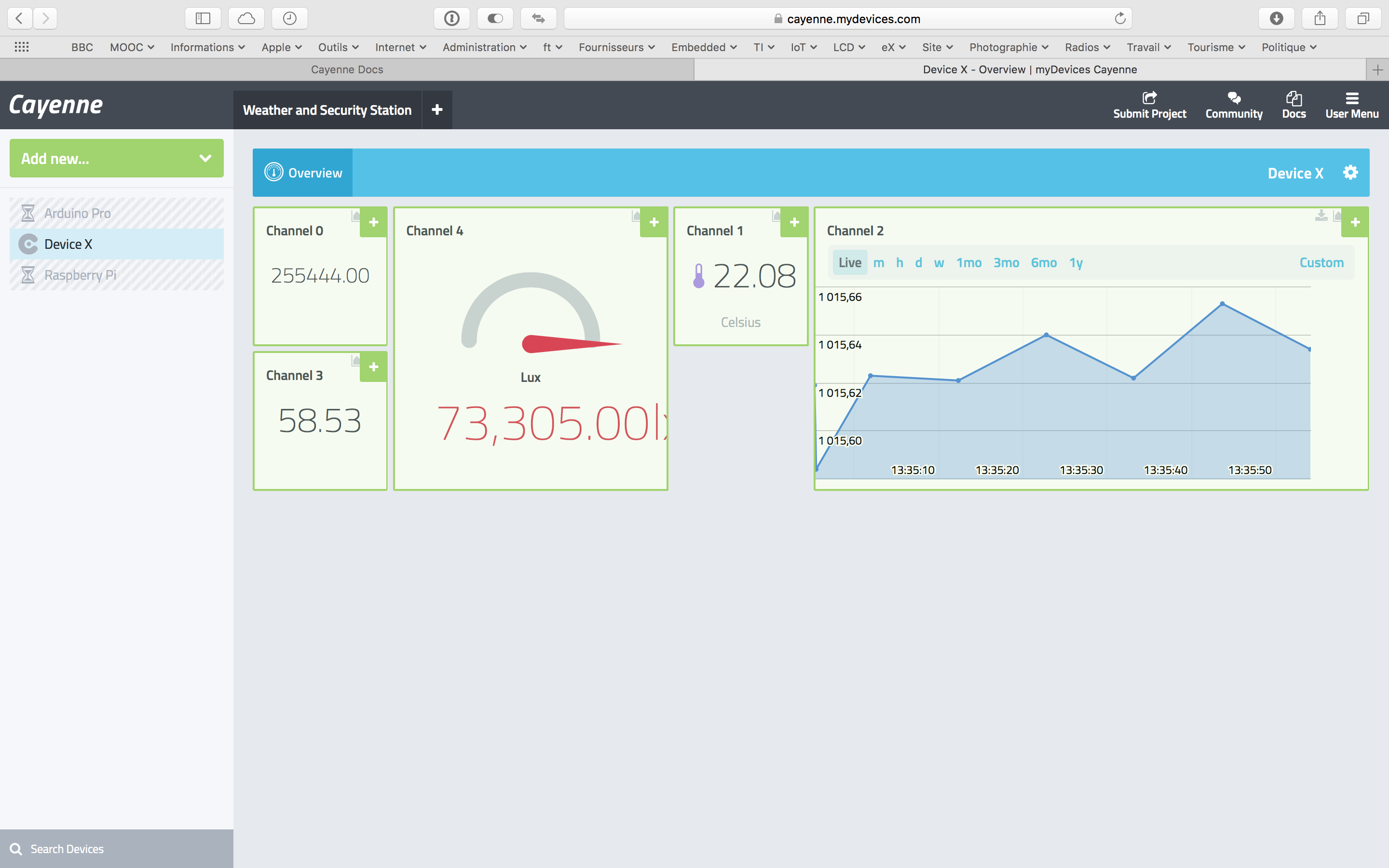
I was delighted to see the dashboard recognised the data I was sending automatically.
​
The Cayenne dashboard even detected the content (temperature) and the unit used (°C).

I confirmed each widget by clicking on the green +, selected the options and rearrange the widgets on the dashboard.
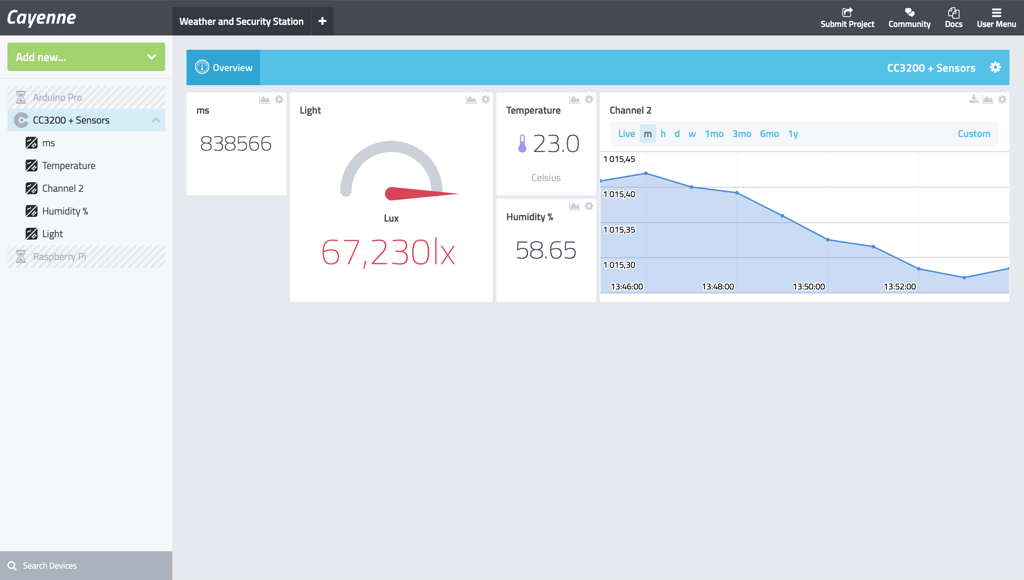
Picture
Here is the final result.

The dashboard is ready!
Picture

Conclusion

I was very happy with Cayenne MQTT and completed my project in less than 10 minutes. The dashboard recognised the data sent automatically.

Cayenne MQTT offers great features and versatility for a cloud-based dashboard read with any browser. Additional features include a scheduler and triggers.

​Now, let's expect a local-server based option!

Pros

  • Any browser to visualise data
  • Schedules and triggers

Cons

  • No local server option

Wrap-Up

  • Easy to implement 
  • Nice dashboards 

Links

  • Cayenne website
  • Cayenne MQTT Support for LaunchPad CC3200 Board thread
  • Modified Cayenne MQTT Arduino Library for Energia
  • Sensors BoosterPack library for weather sensors
Picture
Powered by Create your own unique website with customizable templates.